Mastering Electrical Control Cabinet Panel Layout for Maximum Space Efficiency
In the fast-paced world of industrial automation and manufacturing, every square inch of an electrical enclosure holds immense value. When controls engineers, panel builders, and original equipment manufacturers approach a new build, the physical arrangement of internal components is one of the most critical factors determining success. A well-designed panel layout does more than simply fit components inside a metal box; it dictates the thermal performance, wiring accessibility, long-term serviceability, and overall labor efficiency of the entire system. Unfortunately, traditional panel building techniques often force engineers to compromise, relying on flat steel backplates that limit spatial creativity and lead to oversized, congested cabinets.
Achieving true spatial optimization requires moving beyond legacy assembly habits and embracing advanced structural design principles. Modern industrial facilities demand compact footprints without sacrificing component density or technician safety. This comprehensive guide explores the core strategies for optimizing your electrical control cabinet layout, examines how advanced mechanical framing transforms internal architecture, and reveals how you can reclaim valuable space in your next project.
The True Cost of Poor Panel Layout Design
Before diving into optimization techniques, it is essential to understand why traditional approaches fail to meet modern industrial demands. For decades, the standard procedure for building an electrical cabinet involved taking a flat sheet of steel, measuring component footprints manually, and drilling and tapping hundreds of mounting holes. This method introduces severe limitations that directly impact manufacturing throughput and operational costs.
When a layout is restricted to a single two-dimensional plane, components must be spread out horizontally to accommodate traditional plastic wire ducts and mounting hardware. This horizontal sprawl inevitably forces companies to purchase larger enclosures than strictly necessary. Beyond increased material costs, oversized enclosures consume valuable real estate on machine frames and plant floors. Furthermore, poor spatial planning leads to tightly packed devices that restrict airflow, creating localized thermal hot spots that degrade sensitive electronics over time. By rethinking how you approach your panel layout, you can eliminate these inefficiencies and unlock a new level of manufacturing productivity.
How the Use of a Control Panel Frame Helps Improve Panel Layout Design?
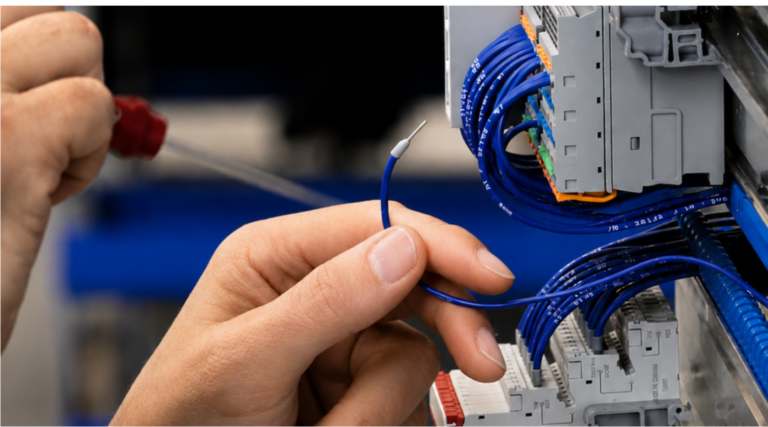
The single most effective way to revolutionize your physical arrangement is to replace static steel backplates with a modular control panel frame. When talking about Satie, we design unique control panel systems that provide better access to component connection points, making assembly faster, cleaner, and more efficient. But how exactly does this specialized framing technology transform your spatial configuration?
Traditional backplates limit your design to a flat, X-axis and Y-axis canvas. In contrast, an advanced aluminum frame system introduces the Z-axis, allowing for true three-dimensional spatial planning. Here is how incorporating a modular frame enhances your enclosure architecture:
- Multi-Depth Component Mounting: Instead of forcing every device onto the same flat plane, aluminum framing allows you to mount components at varying depths. You can position heavy power supplies and transformers on the primary structural plane while elevating communication modules and terminal strips onto dedicated aluminum racks. This tiered approach reduces the required surface area significantly.
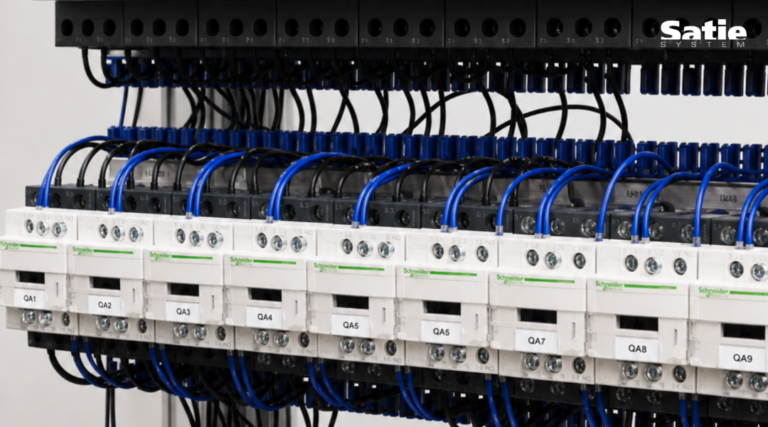
- Elimination of Bulky Plastic Trunking: Traditional designs rely on wide, gray plastic wire ducts that consume massive amounts of usable backplate area and obscure component connection points. Modular frame systems utilize open aluminum wiring management architectures that route conductors neatly along the frame structure. Removing these bulky ducts frees up to 30 percent to 50 percent more usable space within the enclosure.
- Flexible, Non-Permanent Positioning: Because aluminum framing utilizes continuous slots and sliding hardware rather than drilled and tapped holes, repositioning a device takes seconds. If an engineering change order requires adding a component late in the design phase, you can slide existing components along the aluminum racks without scrapping or modifying the backplate.
By leveraging these structural advantages, engineers can dramatically shrink enclosure footprints while maintaining exceptional organization and accessibility.
Strategic Principles for Maximizing Space Efficiency
Optimizing your panel layout requires a methodical approach that balances physical dimensions, electrical requirements, and ergonomic realities. Implementing the following strategies will help you maximize every millimeter of your industrial enclosure.
1. Grouping Components by Functional Hierarchy
A well-organized cabinet mirrors the logical flow of your electrical schematics. Group devices into functional zones such as incoming power distribution, programmable logic controllers, motor control, and safety circuits. Placing related components adjacent to each other minimizes wire lengths and prevents long, winding cable runs that clutter the cabinet interior. When your physical arrangement follows a clear logical hierarchy, troubleshooting becomes faster and more intuitive for technicians on the shop floor.
2. Segregating Power and Control Circuits
Electromagnetic interference (EMI) is a common enemy in industrial automation. High-voltage drives and power switching devices can disrupt delicate low-voltage control signals and communication buses if placed too close together. Use the structural versatility of your aluminum frame to separate power components from sensitive electronics. By creating distinct physical zones on your aluminum racks, you prevent signal corruption while maintaining a clean, highly structured interior.
3. Optimizing Thermal Management Through Open Architecture
Density should never compromise thermal performance. Densely packing components onto a solid steel backplate traps heat against the metal surface. Modular framing systems promote superior natural convection. Because components are mounted on open aluminum racks rather than sealed surfaces, cool air circulates freely around every device. This efficient heat dissipation protects your components from thermal failure and extends the operational lifespan of the control panel.
Streamlining the Assembly Workflow
Spatial optimization extends far beyond the final physical dimensions of the cabinet; it directly impacts the labor required to build it. Traditional panel manufacturing is heavily burdened by manual preparation tasks. Measuring, marking, drilling, and tapping steel plates consumes valuable skilled labor hours and introduces human error.
By transitioning to pre-assembled aluminum framing systems, manufacturers can streamline their entire mechanical installation workflow. Eliminating manual backplate preparation saves valuable workshop hours, while the intuitive nature of sliding hardware ensures precise component alignment every time. Operations that adopt these advanced framing solutions frequently reduce their mechanical installation time by up to 80 percent, depending on application and workflow specifics. This dramatic reduction in labor allows your engineering and production teams to focus on high-value wiring, rigorous testing, and system commissioning.
Ergonomics and Long-Term Serviceability
A compact panel layout provides little value if technicians cannot safely access components during maintenance or field troubleshooting. Striking the right balance between high density and ergonomic accessibility is a hallmark of superior industrial engineering.
When designing with modular aluminum frames, place frequently accessed components, such as diagnostic terminals, PLC ports, and primary circuit breakers, at ergonomic heights. Less frequently adjusted components can be positioned on elevated or recessed aluminum racks. Furthermore, because open aluminum framing eliminates the visual barriers created by traditional plastic wire ducts, every wire and terminal connection remains fully visible. Technicians can trace signals effortlessly without reaching blindly into cluttered conduits, significantly reducing maintenance downtime and enhancing overall workplace safety.
The Business Impact for OEMs and System Integrators
For industrial B2B buyers, machine builders, and system integrators, design choices directly influence profitability and market competitiveness. Adopting an optimized approach to your panel layout yields measurable business outcomes:
- Reduced Material and Shipping Costs: Utilizing up to 30 percent to 50 percent more usable enclosure space allows you to downsize your physical cabinets. Smaller enclosures weigh less, cost less to purchase, and require less shipping space.
- Scalable Manufacturing: Standardizing your panel builds around modular aluminum framing allows you to train assembly technicians faster and scale production capacity up or down to meet shifting market demands.
- Enhanced End-Product Value: Delivering compact, cleanly organized, and thermally efficient control panels elevates your brand reputation and provides your clients with reliable, easy-to-service automation infrastructure.
These advantages transform the electrical control cabinet from a traditional manufacturing bottleneck into a strategic operational asset.
Conclusion
Optimizing your electrical control cabinet panel layout is essential for modern industrial manufacturing success. By moving past the constraints of legacy steel backplates and embracing advanced modular aluminum frame systems, you can achieve remarkable space savings, improve thermal performance, and accelerate assembly workflows. Whether your goal is to shrink your machine footprint, eliminate tedious manual drilling, or streamline internal wiring access, purpose-built framing architecture provides the foundation you need. To discover how our unique framing solutions can transform your control panel manufacturing process, visit Satie North America and explore our innovative aluminum mounting systems today.