Challenging the Status Quo in Panel Building
For decades, the standard procedure for constructing electrical control panels has remained remarkably unchanged. Engineering teams and panel builders receive a sheet metal enclosure, unbox a heavy steel backplate, and immediately set to work measuring, center-punching, drilling, and tapping holes. This foundational methodology has dictated the physical layout of industrial automation for generations. However, in modern manufacturing facilities where throughput, labor efficiency, and floor space dictate profitability, holding onto legacy practices is a significant liability. The traditional steel backplate has become a primary bottleneck in electrical enclosure construction, introducing hidden labor burdens, structural inflexibility, and severe space limitations.
This article examines the structural limitations of conventional backplates and presents a technically credible alternative for OEMs, machine builders, system integrators, and precision panel engineers. By transitioning to pre-engineered custom aluminium frames, manufacturing operations can reduce mechanical installation time by up to 80% while simultaneously unlocking a 30% to 50% increase in usable enclosure space. It is time to challenge convention and explore why the death of the backplate marks the beginning of a more profitable, efficient era in control panel manufacturing.
The Hidden Labor and Cost Burdens of Drilling and Tapping
At first glance, a sheet of galvanized or painted carbon steel appears to be an inexpensive, reliable foundation for electrical components. Yet, calculating the true total cost of ownership (TCO) for a traditional DIY steel backplate reveals a staggering drain on labor resources. The conventional workflow requires a series of labor-intensive steps before a single component can be mounted:
- Layout and Measurement: Technicians spend hours transferring CAD drawings to physical metal sheets using squares, markers, and center punches, where a single measurement error ruins the entire plate.
- Mechanical Machining: Hand-held drills, step bits, and manual taps generate excessive noise, metal shavings, and worker fatigue. Metal filings pose a severe contamination risk if they migrate into sensitive electronic hardware later in the build cycle.
- Hardware Insertion: Securing DIN rails and wire ducts requires fastening dozens of individual screws, lock washers, and nuts, compounding the risk of stripped threads and loose connections under industrial vibration.
When evaluated through the lens of labor costs, every minute a skilled technician spends drilling holes is a minute stolen from higher-value tasks like precision wiring management and system testing. Furthermore, reworking a misaligned hole on a steel backplate often requires plugging, re-drilling, or scrapping the entire plate, adding material waste to the ledger. Modern panel building demands a shift from subtractive, manual fabrication to pre-engineered modular efficiency.
How Sliding Nuts Eliminate Drilling and Tapping
The core innovation that renders the traditional backplate obsolete is the integration of sliding nuts within a modular aluminium frame system. Instead of fighting a solid sheet of steel, builders work with slotted aluminium profiles that accept specialized fasteners designed to slide freely into position along any axis.
This simple yet transformative mechanical feature alters the assembly dynamic completely:
- Zero Manual Threading: Sliding nuts drop directly into the profile slots, aligning effortlessly with component mounting brackets without requiring pre-drilled or tapped holes.
- Infinite Adjustability: If a component needs to be shifted by two millimeters to accommodate a larger busbar, the technician simply loosens the fastener, slides the component laterally to the desired position, and re-tightens the assembly.
- Vibration Resistance: Engineered fasteners lock securely into the aluminium t-slot profiles under torque, creating a vibration-resistant connection that outlasts traditional threaded steel assemblies.
By eliminating the need to drill and tap, manufacturing facilities remove the most dangerous, fatiguing, and time-consuming phase of mechanical panel preparation. The result is a clean, dust-free assembly process where components are positioned with exact mathematical precision in a fraction of the time.
Modular Aluminium Frames and Layout Flexibility
Conventional electrical enclosures trap components in a flat, two-dimensional plane. Every device, from small terminal blocks to massive variable frequency drives, must vie for real estate on the same single-surface backplate. This flat layout forces compromises in thermal management, wire routing, and accessibility.
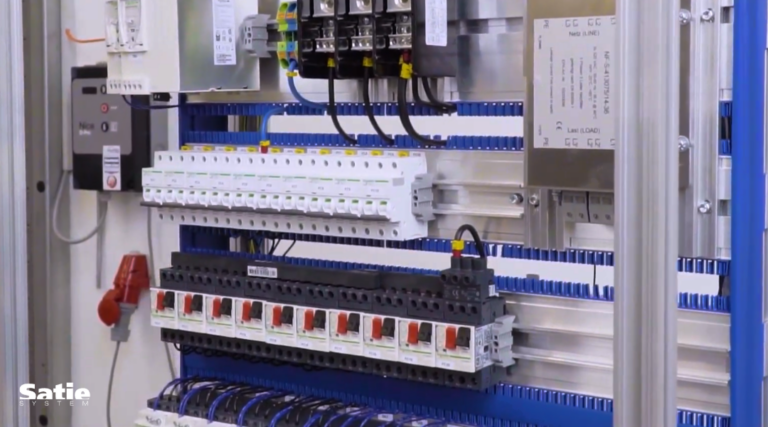
Custom aluminium frames introduce true three-dimensional architecture to the interior of electrical enclosures. Because these systems are modular and pre-engineered to exact project specifications, they allow engineers to distribute components across multiple depths and vertical planes. Critical heat-generating devices can be elevated on dedicated aluminium mounting racks, allowing unimpeded ambient airflow to circulate around all sides of the hardware. This structural freedom prevents thermal hot spots that typically plague densely packed steel enclosures.
Serviceability is another major beneficiary of this structural evolution. In a traditional panel, troubleshooting a buried component often requires dismantling surrounding devices. With a modular aluminium frame, components can be tiered logically, ensuring that diagnostic points and high-interaction devices remain easily accessible to technicians on the shop floor or in the field.
Unlocking 30% to 50% More Usable Enclosure Space
Space constraints are a constant source of frustration for machine builders and system integrators. When an electrical design expands, the traditional response is to step up to a larger, more expensive enclosure, which in turn consumes valuable machine footprint and increases shipping weights.
Aluminium frame systems solve this dilemma by providing a radical space upgrade. By utilizing the vertical and depth dimensions that are completely wasted in traditional flat-plate designs, modular frames deliver 30% to 50% more usable enclosure space within the exact same physical cabinet dimensions.
This space efficiency changes the engineering calculus in several profound ways:
- Avoid Costly Redesigns: When clients request last-minute additions to an automation sequence, engineers can integrate the extra hardware into the existing cabinet without forcing a complete mechanical redesign or upsizing the enclosure.
- Optimized Component Density: Dedicated routing channels on separate planes enable closer component placement without violating clearance standards or crowding wire management paths.
- Reduced Footprint: Machine builders can deliver more complex control systems in compact enclosures, preserving valuable floor space in modern manufacturing plants.
Maximizing density without sacrificing accessibility or thermal performance is the hallmark of advanced electrical enclosures designed for the modern industrial landscape.
Distinguishing Mechanical Installation Time from Overall Build Time
When discussing efficiency gains in panel building, it is essential to distinguish between mechanical installation time and overall build time. Conflating these two metrics obscures where the true labor savings occur.
Mechanical installation encompasses the physical preparation of the enclosure, layout marking, drilling, tapping, and the mounting of structural rails, brackets, and backplates. This is the phase that consumes up to 80% less time when switching from a traditional steel backplate to a pre-engineered aluminium frame system. Because the heavy mechanical fabrication is replaced by swift, tool-assisted positioning with sliding nuts, the hours previously lost to manual shop-floor fabrication evaporate.
Overall build time, by contrast, encompasses the entire manufacturing lifecycle, including electrical wiring, ferrule crimping, labeling, testing, and quality assurance. While wiring management and terminal termination still require skilled human labor, the overall build time benefits from an efficiency boost of up to 20%. This secondary improvement stems directly from the superior organization provided by custom aluminium frames. With clean, dedicated routing channels and unobstructed component access, wiring technicians work faster, make fewer routing errors, and complete continuity checks with greater ease.
Practical Comparison: Steel Backplate Versus Aluminium Frame
To understand the operational impact of this transition, consider the side-by-side comparison of building a complex multi-drive control panel using both methodologies:
- Preparation Phase: The steel approach requires CAD export, paper templates, center punching, and continuous drill-bit replacement. The aluminium frame approach utilizes pre-engineered modular profiles delivered ready for immediate assembly.
- Dust and Contamination: Drilling steel produces abrasive metal shavings that require meticulous vacuuming and cleaning. Aluminium frame assembly is a clean process that generates zero metallic debris, protecting sensitive components.
- Component Adjustment: Moving a component on a steel plate requires unbolting, plugging old holes, and drilling new ones. On an aluminium frame, lateral movement takes seconds via sliding fasteners.
- Weight and Shipping: Heavy steel backplates add significant deadweight to the cabinet, increasing shipping costs and installation rigging requirements. Aluminium frames provide superior structural rigidity at a fraction of the weight.
This practical comparison illustrates why forward-thinking panel builders are abandoning legacy practices in favor of engineered frame solutions.
Conclusion: Embrace the Future of Panel Building
The death of the backplate signifies the end of inefficient, labor-intensive manufacturing habits that have held industrial engineering back for decades. By replacing traditional steel plates with pre-engineered custom aluminium frames, panel builders, OEMs, and system integrators can slash mechanical installation time by up to 80%, achieve an overall build-time reduction of 20%, and unlock up to 50% more usable enclosure space. Eliminating drilling, tapping, and flat-layout restrictions empowers your team to build cleaner, faster, and more reliable electrical control panels. Ready to revolutionize your enclosure construction workflow? Visit the Satie System website today to explore our innovative frame solutions or discuss a custom design tailored to your next manufacturing project.