Unlocking Space Savings in Electrical Control Panels with Custom Frames
In the modern industrial landscape, space is more than just a physical constraint; it is a critical performance metric. As control cabinets become more compact and integrated into sophisticated machine architectures, the pressure on engineers to deliver dense, high-performance systems grows. Traditional panel building methods, which rely heavily on flat steel backplates, frequently fall short of these modern demands. Achieving effective space savings requires moving beyond archaic mounting techniques toward intelligent, modular framing architectures that treat the internal volume of the enclosure as a three-dimensional asset.
Many system integrators and OEMs struggle with the dilemma of component density versus technician accessibility. How can one shrink a panel footprint while maintaining, or even improving, the ease of maintenance and wiring? The answer lies in replacing legacy mounting plates with advanced aluminum frame solutions. By shifting to a modular, rack-based design, engineers can unlock significant efficiencies that were previously unattainable with static steel surfaces. This transition does not just solve the immediate challenge of physical fit; it reframes the entire cabinet lifecycle through the lenses of precision, scalability, and labor optimization.
The Architecture of Spatial Efficiency
To realize genuine space savings, one must challenge the assumption that a panel interior is a flat canvas. Traditional designs prioritize two-dimensional mounting, which leads to oversized enclosures that consume valuable plant floor space. By transitioning to a modular aluminum frame system, the focus shifts to utilizing the depth and verticality of the enclosure.
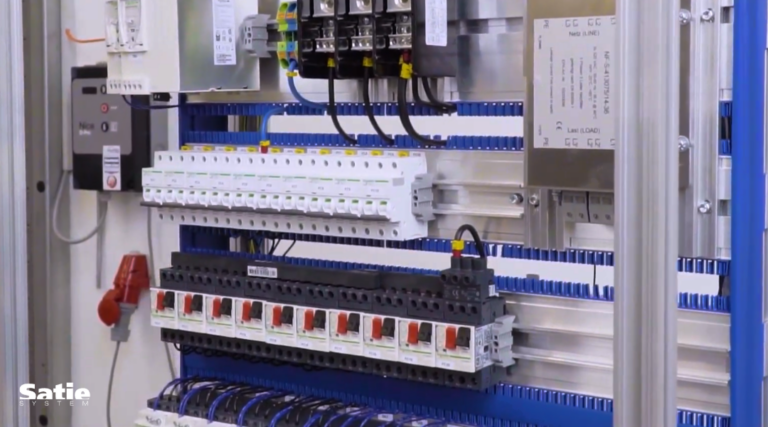
- Three-Dimensional Mounting: Instead of surface-mounting all components to a single backplate, aluminum frames allow components to be mounted at different depths. This vertical layering frees the layout from the rigid constraints of traditional cable trays, allowing for a more efficient use of the enclosure’s volume.
- Eliminating Fixed Hardware: Because aluminum frames utilize sliding nuts, you can eliminate the need for manual drilling and tapping. This hardware allows components to be moved laterally with ease, providing precision adjustment without the permanence of fixed holes.
- Optimized Routing Paths: By creating dedicated cable-routing channels on different planes, wiring moves away from the component face. This multi-plane approach lets components be placed significantly closer together, directly contributing to massive space savings.
The Space Upgrade Advantage
Perhaps the most significant benefit of modular framing is the ‘space upgrade’ it provides within existing footprints. By moving to an aluminum frame architecture, you gain 30% to 50% more usable space inside the same cabinet. This allow OEMs to add additional equipment or future-proof their designs without the need to redo all mechanical engineering or increase the external enclosure size.
Balancing Density and Accessibility
A common concern regarding space savings is the potential loss of access for troubleshooting. However, the use of modular aluminum frames actually enhances serviceability. While the basic positioning of components remains similar to traditional methods, the ease of access is vastly improved. Serviceability comes from components being elevated on the frame and no longer surrounded by traditional plastic cable trays, which often block access and airflow.
Ergonomic Component Arrangement
When you detach your design from the requirements of a steel backplate, you gain the freedom to position components at ergonomic heights. By placing power-intensive components in areas that naturally support airflow and positioning critical terminals at accessible levels, you maintain serviceability even while increasing density. The result is a high-density panel that remains remarkably easy to navigate.
Predictable Troubleshooting
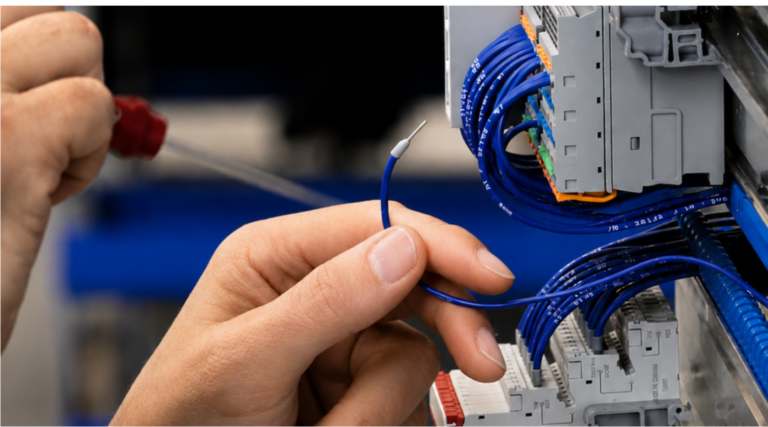
High-density panels designed with aluminum frames are inherently cleaner. Because cabling is managed via structured, rack-integrated pathways rather than sprawling plastic conduits, visual clarity is maintained. Technicians spend less time tracing wires buried in cluttered cabinets, which is a major advantage for machine builders aiming to reduce the total cost of ownership for their clients.
Strategic Benefits for OEMs and System Integrators
When you optimize your cabinet design for size, you lower costs across the supply chain. Smaller enclosures require less transport space and less floor space within your client’s facility. To explore how our precision-engineered solutions can help your next project, visit Satie System to learn more about our custom aluminum frame designs.
Conclusion
Achieving superior space savings in control cabinet design requires a departure from legacy thinking. By embracing modular aluminum frames, you solve the dual challenge of maximizing density and maintaining the accessibility required for long-term serviceability. These systems allow you to optimize enclosure volume by 30 to 50% while improving the technician experience. Start your transformation today by partnering with our expert engineering team.